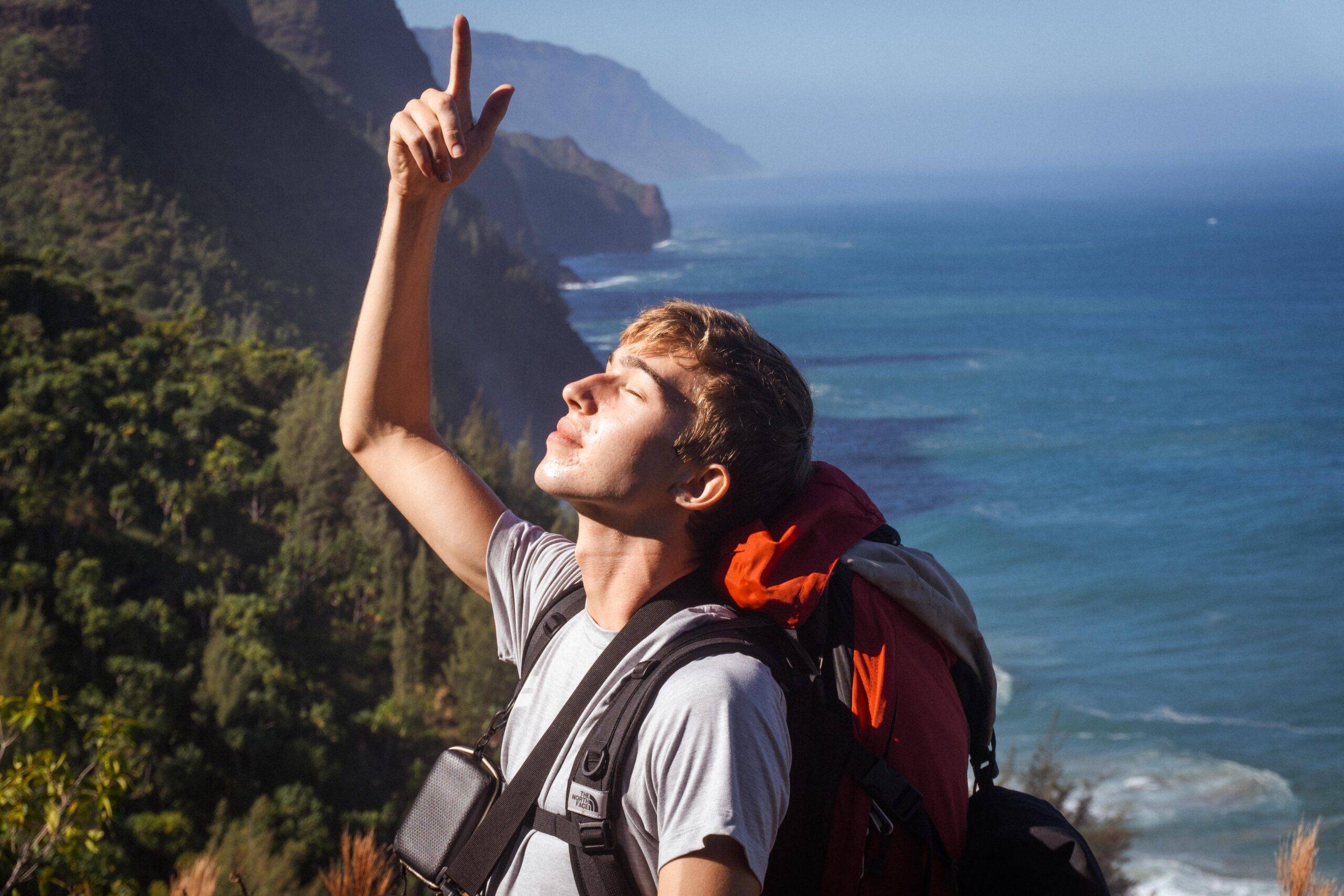
When travelers typically think of Europe, they envision Rome, Paris, and London. Although I love Western Europe, I believe everyone should take a trip to the Balkans. Backpacking this route in Southeastern Europe is unforgettable, and even more exciting. That is why I compiled this extensive one-month Balkans travel itinerary, using my experience from my own Balkans solo trip.
Visiting Western Europe Instead? Read My Europe Backpacking Itinerary: Visit 10+ Countries in 30 Days
You will explore Roman ruins in Croatia, marvel at scenic lookouts in Montenegro, and hike stunning trails in Albania. Admittedly, backpacking this region of Europe is a bit more difficult because of the lack of train infrastructure, and most countries in the Balkans are not a part of the Schengen Area.
In this Balkans travel itinerary, I will discuss the cost and safety of backpacking in the Balkans. Then, I will share my Balkans travel itinerary for one month, including information on where to stay and what to do in each location.
Hi, I am Noah takes the world. I love solo traveling. Planning a solo trip can be stressful with endless scrolling and searching.
My mission is to make your solo trip a reality.
Subscribe to my monthly newsletter—stunning photos and stories to guide your solo trip
This post may have affiliate links. I receive a small percentage if you book a hostel or attraction through my recommended links. This is at no extra cost to you and helps me reach my goal of becoming a full-time digital nomad.
- How Many Balkan Countries Can You Visit in One Month?
- What Time of Year Should You Backpack The Balkans?
- Can You Backpack The Balkans in a Month?
- Is It Safe to Solo Travel to The Balkans?
- How Much Does It Cost to Backpack The Balkans for One Month?
- Why Do You Need a Eurail Pass to Backpack The Balkans?
- My Complete Itinerary for Backpacking The Balkans in One Month
- Day 1-2: Fly to London
- Day 2-4: Fly to Zagreb and Enjoy Its Charm
- Day 4-6: Take the trek to Lake Bled
- Day 6-8: Backtrack to Ljubljana
- Day 8-11: Head South to Split
- Day 11-13: Cross the Border to Mostar
- Day 13-16: Venture Onward to the Historic Sarajevo
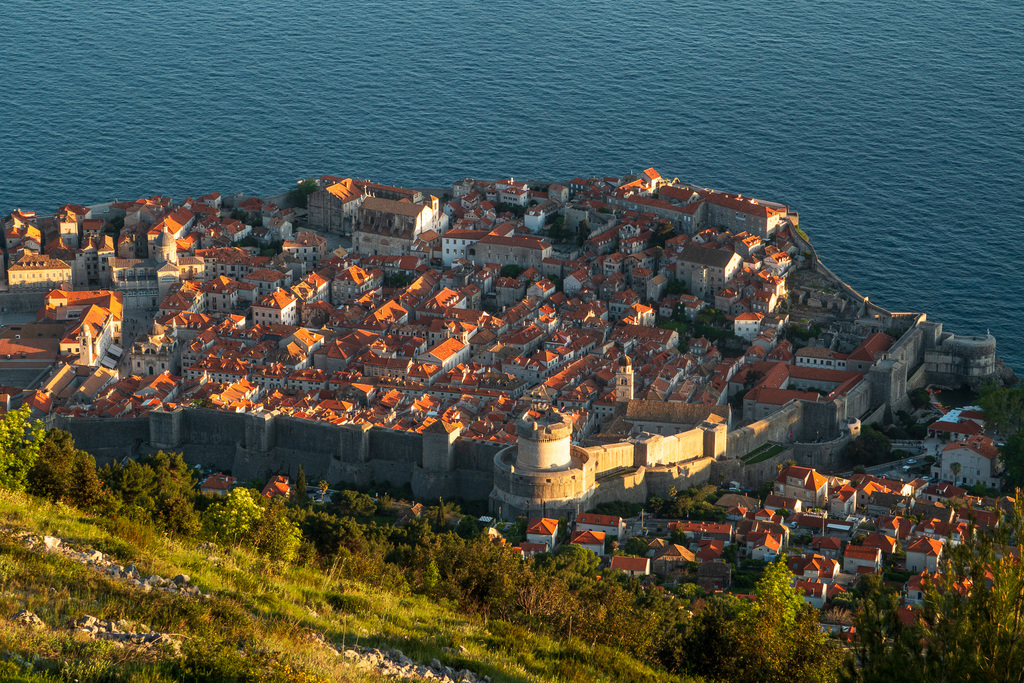
- Day 16-19: Head Back to Croatia and See Dubrovnik
- Day 19-21: Stop in Kotor
- Day 21-24: Trek to the Albanian Alps
- Day 24-25: Bus to Tirana, Albania's Capital
- Day 25-26: Visit The Beach Town Of Saranda
- Day 26-27: Corfu
- Day 27-29: Hike Meteora’s Rocks
- Day 29-31: End Your Trip In Athens
- The Perfect One-Month Balkans Trip Itinerary
How Many Balkan Countries Can You Visit in One Month?
When I backpacked the Balkans, I visited six countries in a month. I started in Slovenia and traveled south, ending in Greece. During my trip, I traveled along the Adriatic Coast, so I did not venture to the landlocked countries in the Balkans (Hungary, Serbia, North Macedonia, etc).
It is possible to visit more countries in that span, but six is manageable. Unlike Western Europe, few high-speed trains connect countries in this region. Also, travel times at borders can be long because of passport checks, so traveling between countries in the Balkans can be a bit of an ordeal.
What Time of Year Should You Backpack The Balkans?
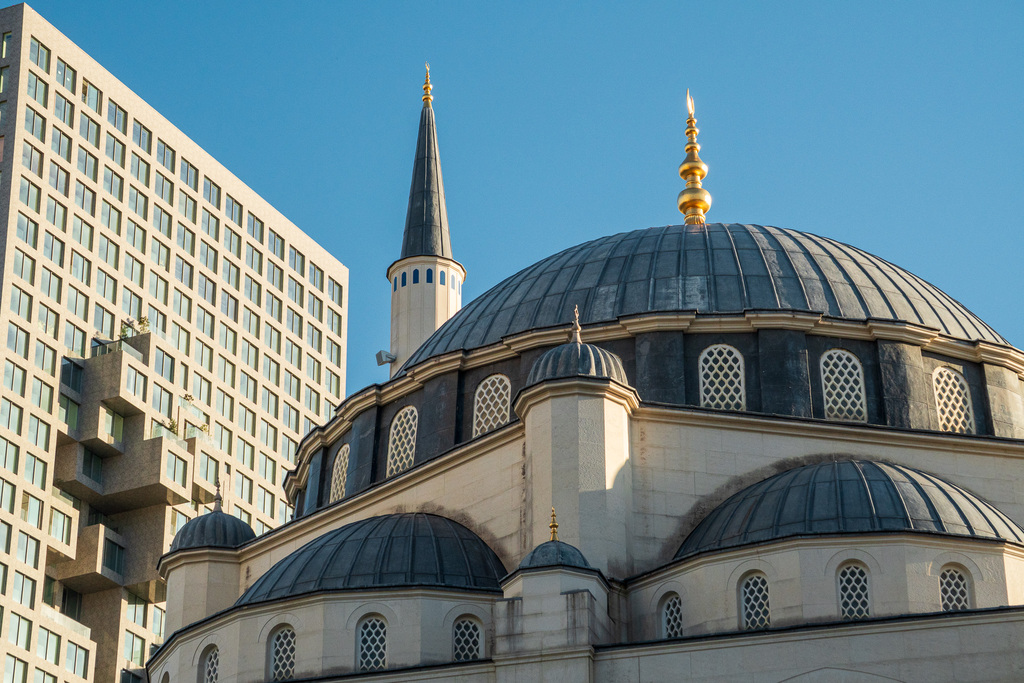
For pleasant weather and fewer crowds, visit the Balkans during the shoulder seasons. Think April to June and September to November. I visited the Balkans in May, and the weather was warm and comfortable.
If your primary motivation for visiting the Balkans is going to the beach or hiking the Albanian Alps, you might prefer visiting in the summer months. You can expect prices and the crowds to increase, but not as dramatically as they do in Western Europe.
Can You Backpack The Balkans in a Month?
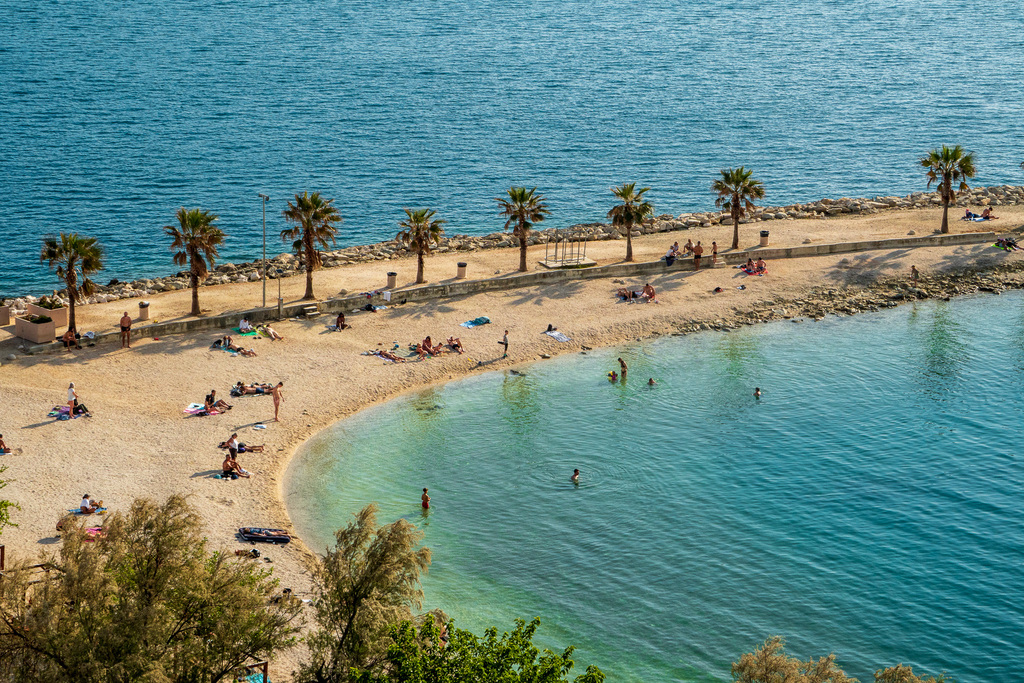
It is difficult to visit every country in the Balkans if you only have a month. However, a month is a great time to get a good taste of the region. You could focus on countries surrounding the Black Sea or the countries that border the Adriatic Sea. In this one-month Balkans travel itinerary, I will focus on visiting the countries that border the beautiful blue waters of the Adriatic Sea.
Is It Safe to Solo Travel to The Balkans?
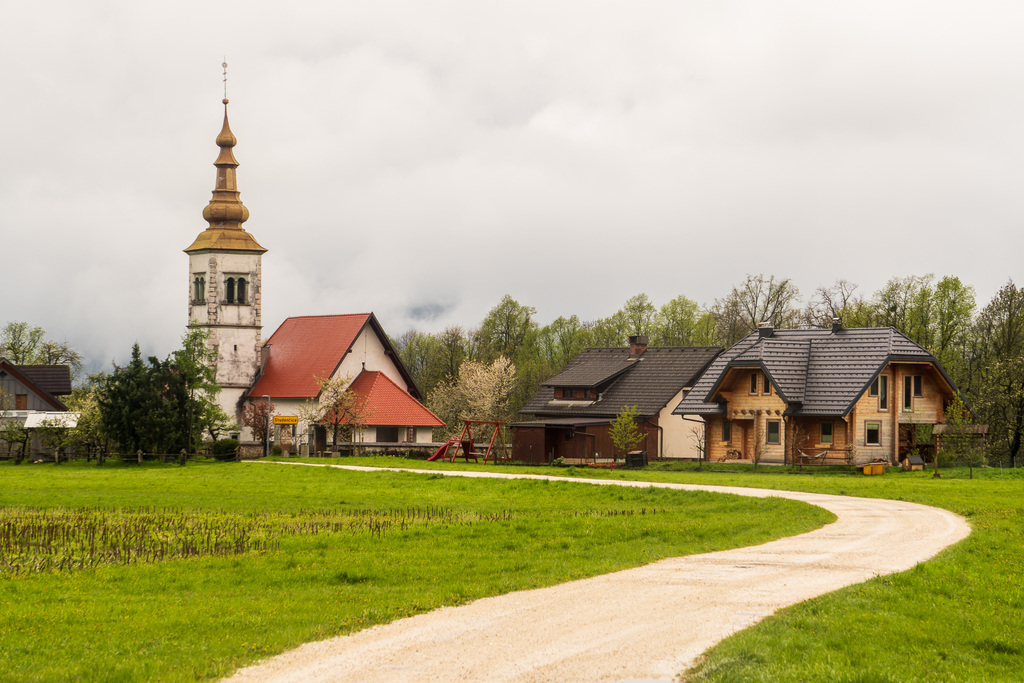
Although some countries in the Balkans have a reputation for political instability and conflict, those are outdated stereotypes. The Balkans are a safe destination for travel. When traveling, it is important to have your phone and wallet zipped away to deter pickpockets. However, there are typically fewer petty crimes here than in Western Europe.
In some countries, specifically Bosnia and Herzegovina, there may be landmines leftover from the Yugoslav War. If you stick to marked trails, you do not need to worry about them. It is also good practice to be up to date on travel advisories when visiting the Balkans. You should be aware of current events in each country you plan to visit.
Overall, you can have peace of mind when traveling in the Balkans if you are prepared and respectful. Generally, the people here are more open and inviting than those in Western Europe. You will encounter many friendly people here, ready to extend their kindness.
However, I always recommend that travelers purchase travel insurance before going on their trip. You never know when you will need it! (You could get food poisoning in Japan, like I did). Use the widget below to find the plan that best suits your needs.
How Much Does It Cost to Backpack The Balkans for One Month?
One perk of visiting the Balkans (besides its vibrant culture and beautiful cities) is that it is cheaper than Western Europe. If you stay in hostel dorms and use public transport, you can complete your Balkans travel itinerary for about $2,000. Of course, if you eat out more and book private rooms, you will spend closer to $3,000.
Why Do You Need a Eurail Pass to Backpack The Balkans?
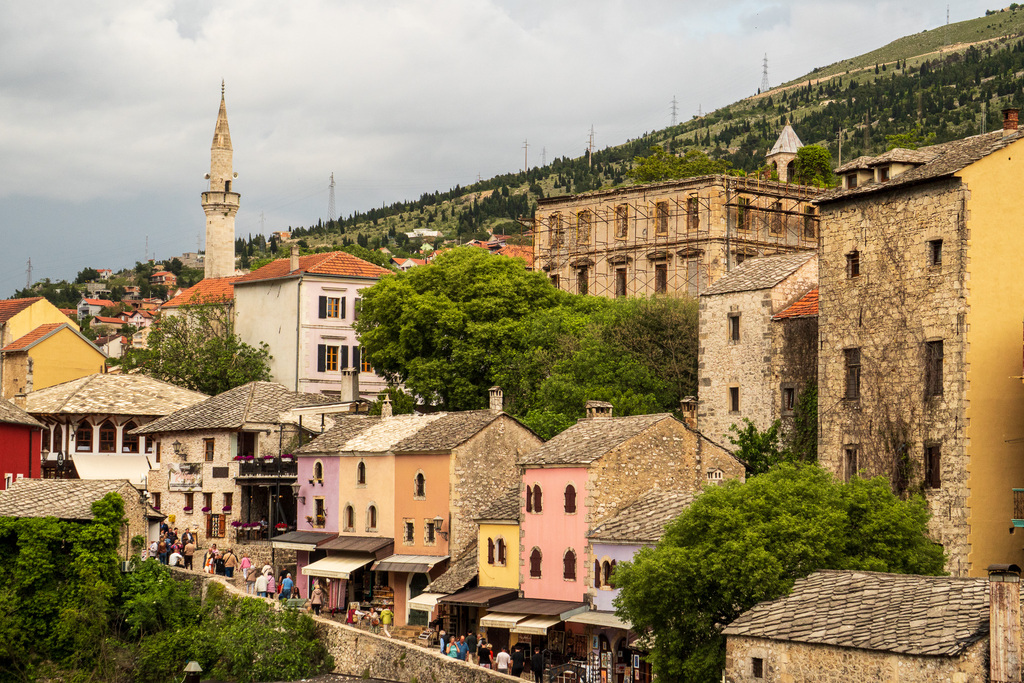
Unlike when visiting Western Europe, you do not need a Eurail Pass to complete your one-month Balkan travel itinerary. Most countries in the Balkans lack efficient train infrastructure, and you will use highway buses more often than trains to travel around.
In my Balkans travel itinerary, I will explain how to travel between each country. I will share the most cost-effective ways to travel from Point A to Point B. Typically, a highway bus ticket in the Balkans is around $20 to $30 USD.
For buying bus tickets in the Balkans, you can use the online bus service Omio to book your bus ticket. Sometimes, it is cheaper to buy your tickets when boarding the bus or at the bus station. Although you may save a few euros doing this, I found it was easier to book my buses before starting my trip for peace of mind.
My Complete Itinerary for Backpacking The Balkans in One Month
Day 1-2: Fly to London
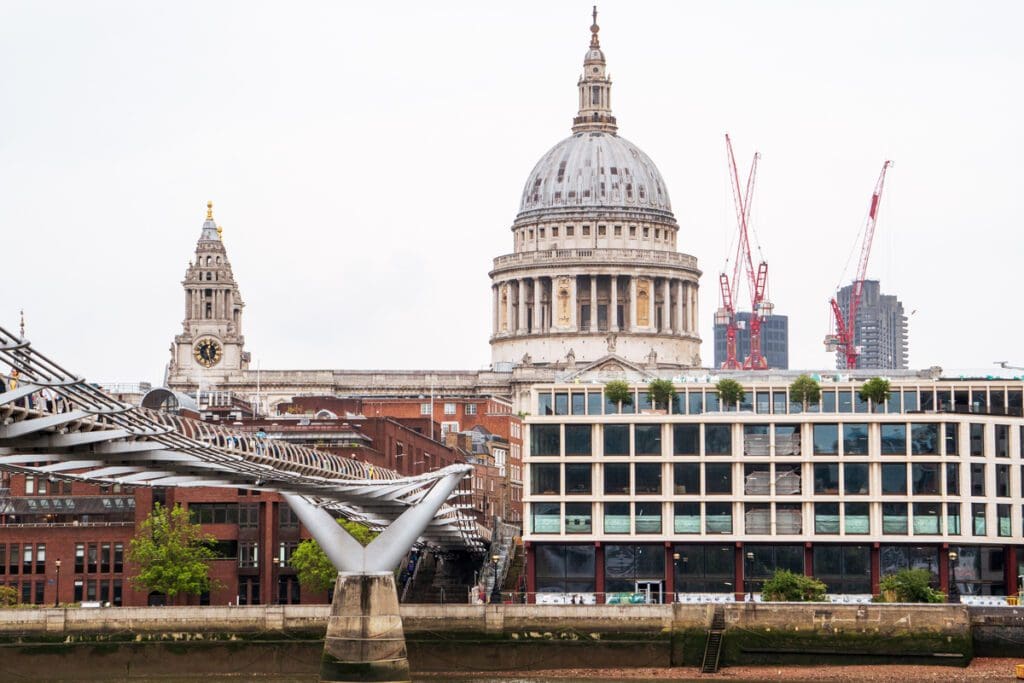
London? Why are we starting our Balkan trip in the U.K.? Well, it is typically cheaper to fly to a major city in Europe, like London or Paris. Then, transfer to a cheaper flight within Europe to head to the Balkans.
A low-budget career (like Ryanair) can take you to the Balkans once you are in Europe. It is more difficult to find an economical flight that originates from the U.S, Canada, or Australia and ends in a Balkan country.
Where to Stay
London has many great hostels. If you want a social hostel, located in a charming residential area, stay at Onefam Notting Hill. If you want the most budget-friendly option, stay at Clink621. This hostel is located only 9 minutes from the King’s Cross train station.
What to Do
During your layover in London, I recommend spending at least a night or two to rest and enjoy London. Check out TKTS Booth in Leicester Square for same-day discounted West End Tickets, or go up to the Sky Garden for an unforgettable city view. Free tickets are released every Monday morning (excluding bank holidays) three weeks in advance for the whole week.
Day 2-4: Fly to Zagreb and Enjoy Its Charm
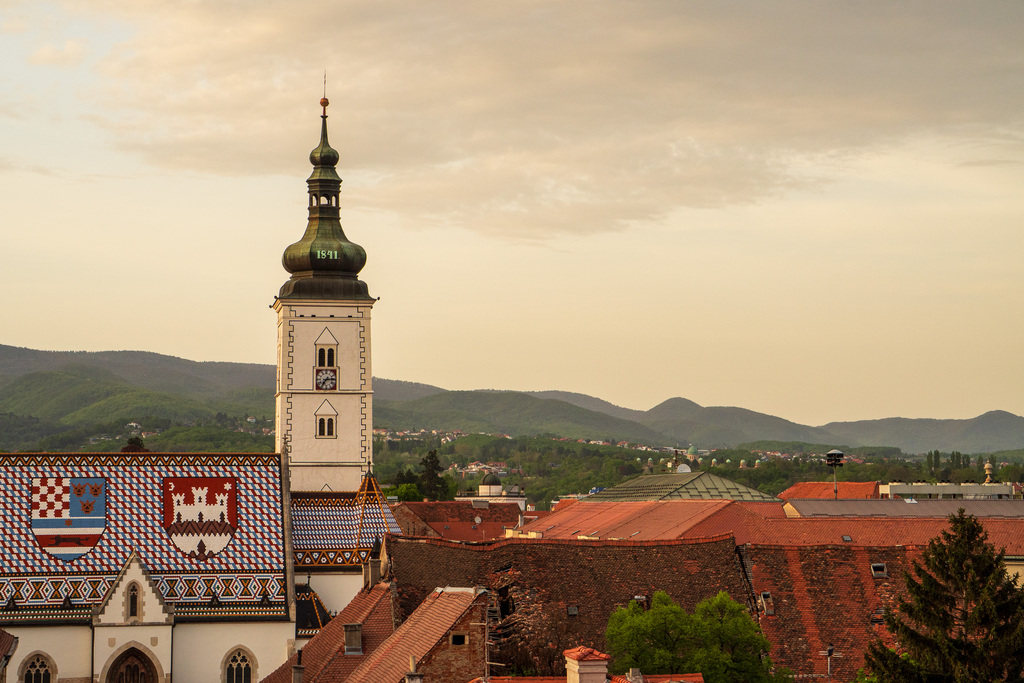
After a few days in London, it is time to hit the Balkans. Zagreb, the capital of Croatia, is a great place to start your Balkan travel itinerary. Flying from London is cheap, even if you use a budget airline like Ryanair.
Technically, if you fly to Zagreb and also plan to visit Slovenia before heading south to Albania and Greece, you will have to backtrack some. If you find a cheap flight to Slovenia, it would be more efficient to start your Balkan trip there. However, if you are on a budget (like I was), you will most likely find the cheapest place to fly into the Balkans is Zagreb.
Where to Stay
Stay at Main Square Hostel. It is mere steps from the heart of the city, and the beds are capsule style, meaning you get to have ample privacy in your dorm. The hostel also offers free breakfast and has a group chat that coordinates daily activities.
What to Do
You have to see the Zagreb Cathedral in Old Town, obviously. Then, climb the Lotrscak Tower for a stunning view of St. Mark’s Church. For a unique museum experience, visit the Museum of Broken Relationships. Take tram 5 or 17 to Jarun Lake and soak in the sun. For beautiful manicured gardens, head to Park Maksimir.
Day 4-6: Take the trek to Lake Bled
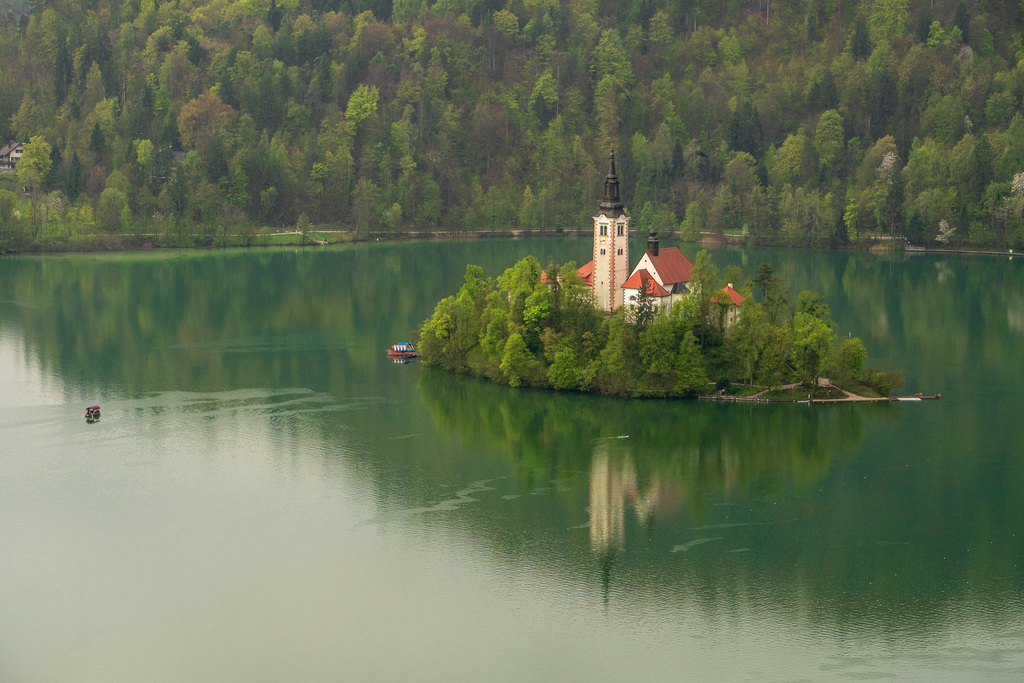
After enjoying the scenic capital of Croatia, it is time to head to Slovenia. There is plenty more to explore in Croatia, but before you head south to Croatia’s most famous spot, you should visit Slovenia!
Slovenia is a peaceful, mountainous country that feels like Switzerland mixed with Venetian influence. Here, you need to spend a night or two in Ljubljana, the country’s capital, and also see Lake Bled, a famous lake town with castles and sacred churches.
How to Access
To reach Lake Bled from Zagreb, the cheapest way is to take a train to Ljubljana. Then, transfer to a bus near the train station to Lake Bled. You can buy a train ticket to Ljubljana at the Zagreb train station for about 8 EUR. This trip takes about 2 hours.
You can buy the bus ticket to Lake Bled from Ljubljana online (30 days in advance) for 6.50 EUR. You can also buy a ticket at the Ljubljana bus station. The bus station is very close to the train station, but they are separate buildings. This trip takes about 1 hour. There are direct buses that can take you from Zagreb to Lake Bled, but they cost more.
Where to Stay
Book a few nights at charming Bled Hostel. This hostel is conveniently located a few blocks from the main attractions in Bled. It also has a bar, making it a social, cozy place to stay in Bled. Staff here will also help you plan your trip to Lake Bled and connect you with excursions.
What to Do
Trek up to Bled Castle for a grand view of Lake Bled. You can tour the inside of the small castle, but the main attraction is the view. For more epic views of the glacier-fed lake, hike to Mala Osojnica. It is a steep mile trek up the mountainside, but the view of Bled and the island on the lake that houses the Church of the Assumption of the Blessed Virgin Mary is unforgettable.
When staying in Bled, you must also try the Bled cream cake. You can find this dessert at any local cafe or even at the supermarket. You can also take day trips to Lake Bohinj and Vogel Ski Resort. If you don’t have time for a day trip, you can simply rent a bike from the main bus stop and bike around the lake.
Day 6-8: Backtrack to Ljubljana
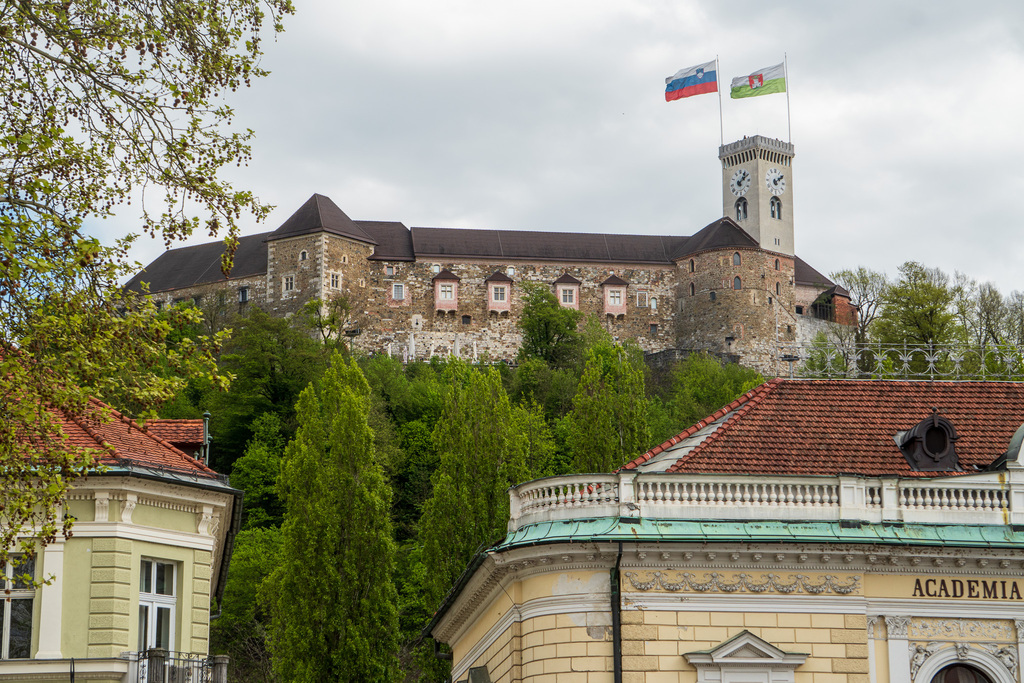
Admittedly, Ljubljana is not the most exciting city in this one-month Balkans travel itinerary, but it is charming and has a castle. You do not necessarily need to spend more than one or two nights here. However, its architecture and old town cannot be missed.
How to Access
You can buy the bus ticket to Ljubljana from Lake Bled online (30 days in advance) for 6.50 EUR. You can also buy a ticket while on board. This trip takes about 1 hour. There is a local train that connects Bled to Ljubljana, but it takes over 3 hours to complete.
Where to Stay
If you want a relaxing stay in Ljubljana, then stay at AdHoc Hostel. This is not the most social hostel, but its facilities are top-tier. Also, the location is perfect as it is located right along the river and near the castle.
What to Do
When visiting the capital of Slovenia, you must walk through the Old Town. There are many noble sites (Triple Bridge, Dragon Bridge, Robba Fountain, Cobbler’s Bridge, Robba Fountain, Preseren Square, and the Franciscan Church of the Annunciation). You can also visit the Ljubljana Cathedral for 3 EUR, and check out street vendors along the open-air Central Market.
Get a yummy sandwich for lunch at Dobra Vila Sendvičerija, and tour the National and University Library (open to visitors on Saturdays). Here, you can explore a grand reading room.
Make sure to register for the city’s bike share for 3 EUR, and you can take an unlimited number of trips within 60 minutes for free! Once you have access to a bike, pedal around the lush forests in Park Tivoli.
Day 8-11: Head South to Split
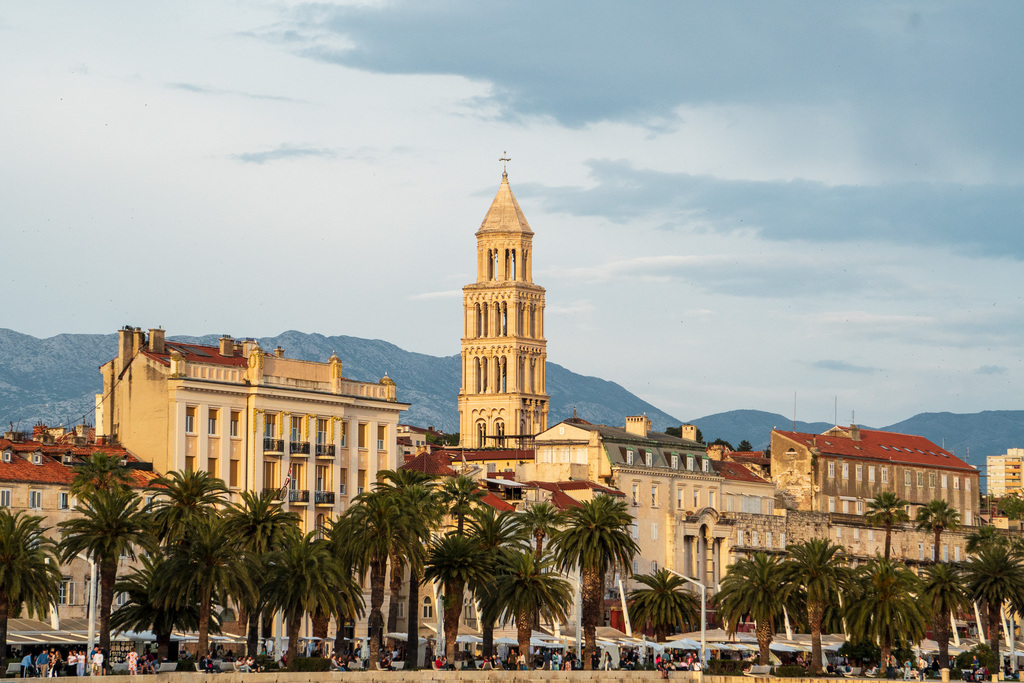
It is time to travel to Split, Croatia, which is personally one of my favorite cities on this Balkans travel itinerary. Split is the perfect destination for a history and nature buff. From Ljubljana, it takes a full day to travel to Split. However, the journey is well worth it. You can bypass Slovenia on this one-month Balkans travel itinerary if you are short on time to cut down on travel time. I recommend spending at least 3 nights in Split.
How to Access
From Ljubljana, the cheapest way to get to Split from Ljubljana is to take a 2-hour train to Zagreb train station for about 8 EUR. Then, transfer to a new train headed for Split. You can buy this train ticket online for about 15 EUR. Only one or two trains run to Split from Zagreb each day, and the journey takes 8 hours.
When I took this train journey, I loved it. The train cars are hot, and you won’t have very much space on the train. However, I enjoyed the trip because it was so scenic, and the windows were down. I made a video about my experience, and immediately received comments from locals saying I should have taken the bus.
If you want to follow the advice from locals and take the bus, I won’t be offended. Use the online bus service Omio to book your bus ticket. Buses range from 20-30 Euros. Make sure to print your ticket out beforehand. Also, have spare change with you. Typically, bags are not included in your ticket. To stow a bag under the bus, you will have to pay a few dollars per bag.
Where to Stay
Beach Hostel Split is a fun hostel that is great for connecting with fellow travelers. You can also have a quiet night at home since they make sure any parties leave the hostel by 10:00 p.m. The hostel is within walking distance of the beach and city center.
What to Do
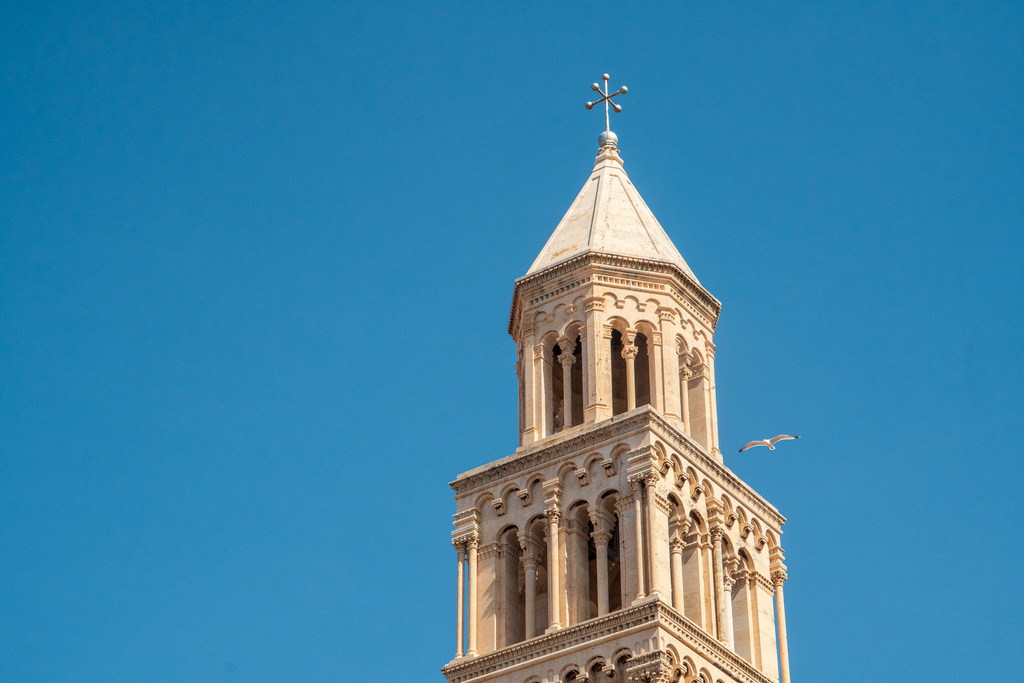
The most famous attraction in Split is Diocletian’s Palace. You must tour this UNESCO World Heritage site, located in the heart of the city center. The highlights of the tour include the St. Domnius Cathedral and the bell tower. There are different packages you can buy for touring this temple complex that range in cost from 10-20 EUR.
Besides housing ancient wonders, Split is home to stunning beaches and hiking trails. Take bus 12 from the city center to Kasjuni Beach. Nearby this picturesque sandbar is Marjan Hill. This nature park has many viewpoints that you must explore. If you are up for a challenge, walk the 5-mile loop around the hill and pass by churches and houses carved into the hillside.
Another famous attraction near Split is Klis Fortress. Take bus 22 from Central Split’s bus terminal to reach this ancient fortress that was used in filming the TV series “Game of Thrones.” Near Klis Fortress is the town of Solin, which is home to ancient Roman ruins and nicknamed “the Pompeii of Croatia.” The bus also stops here on its way to Klis.
Day 11-13: Cross the Border to Mostar
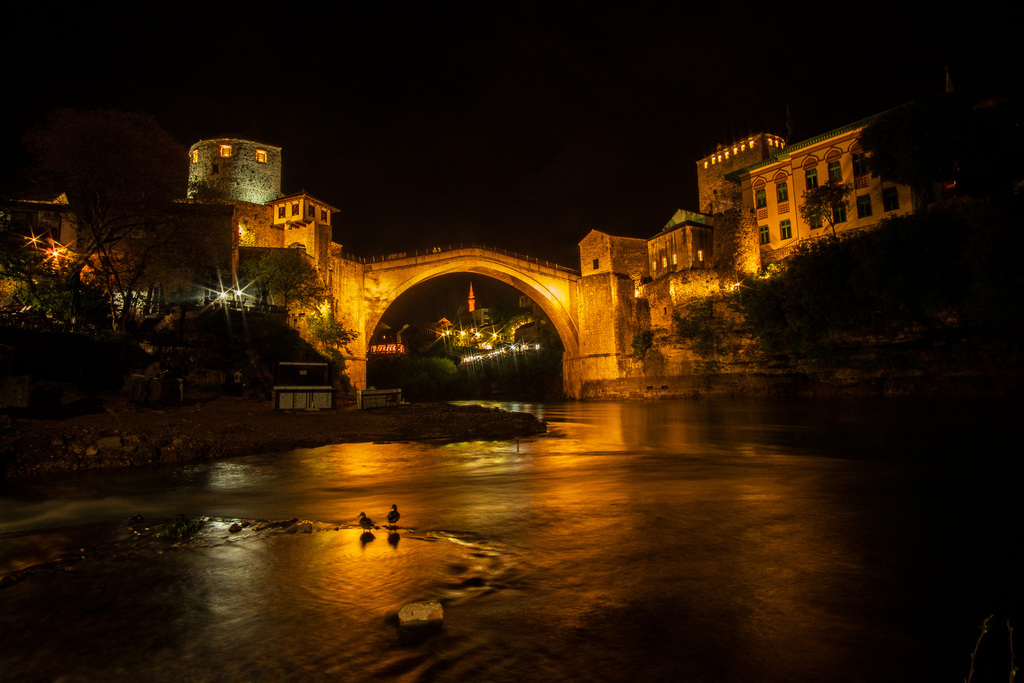
We aren’t done yet with Croatia. After all, we must visit its most famous tourist destination, Dubrovnik. However, if you do not want to backtrack, you need to cross the border into Bosnia and Herzegovina to Mostar first.
Bosnia and Herzegovina is less touristy than Croatia, which is part of its appeal. The country still has visible scars from the Yugoslav War in the 90s. Despite its horrific past, this country is well worth a visit. Mostar is a great introduction to the country. You can also first head to Sarajevo, and then work your way back to Mostar. Mostar is fairly small, so one or two nights is recommended for visiting this city.
How to Access
The only way to reach Mostar from Split is via highway bus. Remember, it may take a few extra hours to cross the border because all passengers have to exit the bus to present their travel documents. Then, reboard the bus afterwards.
Use the online bus service Omio to book your bus ticket. This journey will cost around 30 EUR. Make sure to print your ticket out beforehand. Also, have spare change with you. Typically, bags are not included in your ticket. To stow a bag under the bus, you will have to pay a few dollars per bag.
Where to Stay
I highly recommend staying at Mostar Downtown Hostel. It is run by the sweetest family and offers a cozy atmosphere. From the dormitories, you can peer out the window into the house’s charming garden. The hostel is also located in the heart of the old town.
What to Do
Mostar is a small medieval town with Ottoman Markets and the famous Stari Most Bridge. This bridge is an iconic symbol, and its resilience following the devastating war. You may even spot professional divers jumping off the old bridge.
Make sure to also enter the Pasha Mosque and pay 15 Marks to enter the top of the minaret for a stunning view of Mostar and the Stari Most Bridge. Besides exploring Mostar’s old town, you need to take a day trip to Blagaj to reach the Stari Grad. Visiting this ancient fortress is one of the most unforgettable things to do in Herzegovina.
You can reach Blagaj by taking local bus 10 from Mostar. It costs 2.10 Marks. To reach the fortress from Blagaj, it is about 2 miles each way. You can also drive to a parking lot near the fortress, making the hike to the fortress about 1 mile. For more information, watch the video I made on the Stari Grad.
Day 13-16: Venture Onward to the Historic Sarajevo
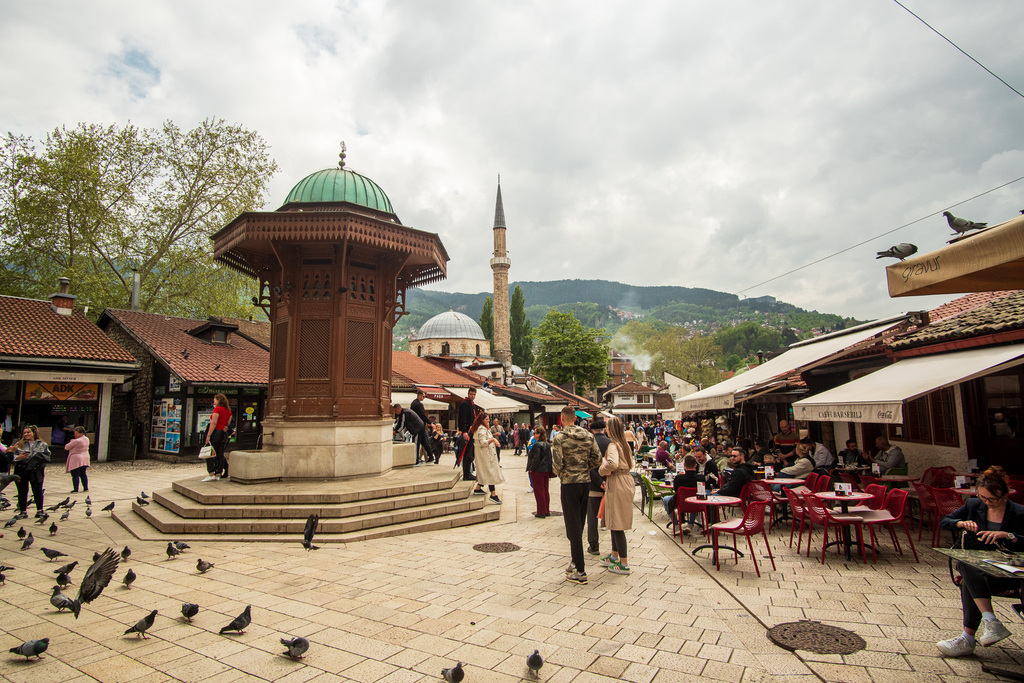
After spending a few days in Mostar, it is time to head deeper into the country and visit the capital, Sarajevo. This city hosted the Winter Olympics in 1984. 8 years later, the city became the epicenter of constant shelling and ethnic cleansing during the war.
Today, the city has transformed into a multi-cultural city with skyscrapers and a lively old town. Sarajevo is known for having mosques, Orthodox churches, and Catholic cathedrals within minutes of each other. The religious diversity here and the beautiful mountains surrounding the city make visiting this city a transformative experience. You should spend around three nights here.
How to Access
There is a train line that connects Mostar with Sarajevo, but the times are very infrequent, and most people just recommend taking the bus. Use the online bus service Omio to book your bus ticket. This journey takes around 2-3 hours. Try to get a window seat because the scenery is stunning.
This journey will cost around 10-15 EUR. Make sure to print your ticket out beforehand. Also, have spare change with you. Typically, bags are not included in your ticket. To stow a bag under the bus, you will have to pay a few dollars per bag.
Where to Stay
For a modern hostel with a personal touch and friendly staff, stay at Hostel Kucha. Admittedly, their location is in a residential part of town and requires a steep walk uphill. However, the walk is worth it because the hostel is social and has a large outdoor terrace.
What to Do
Head to an award-winning museum, Galerija 11/07/95, to learn more about the Yugoslav War and genocide. For the best museum experience, get the audio guide as well. It will cost around 20 Marks.
Take a free walking tour of Sarajevo to learn about the city’s rich history. Although the tour is free, you need to book it beforehand. Also, it is good practice to tip your guide afterward. Visit the business district of Sarajevo and go up the Avaz Twist Tower for a view over the whole city. Order cevapi, the country’s national dish, at Ćevabdžinica Željo 3. You will not regret eating the beef dish served in a pita bread.
Escape the city for a bit and take the Trebevic cable car up to see the mountain that hosted the 1984 Olympics. Most of the structures from the Olympics are abandoned. You can walk along the Bobsled track that has now become a public display of art and graffiti. Also, you can hike up to Trebevič Peak following a trail from the top of the cable car station.
Day 16-19: Head Back to Croatia and See Dubrovnik
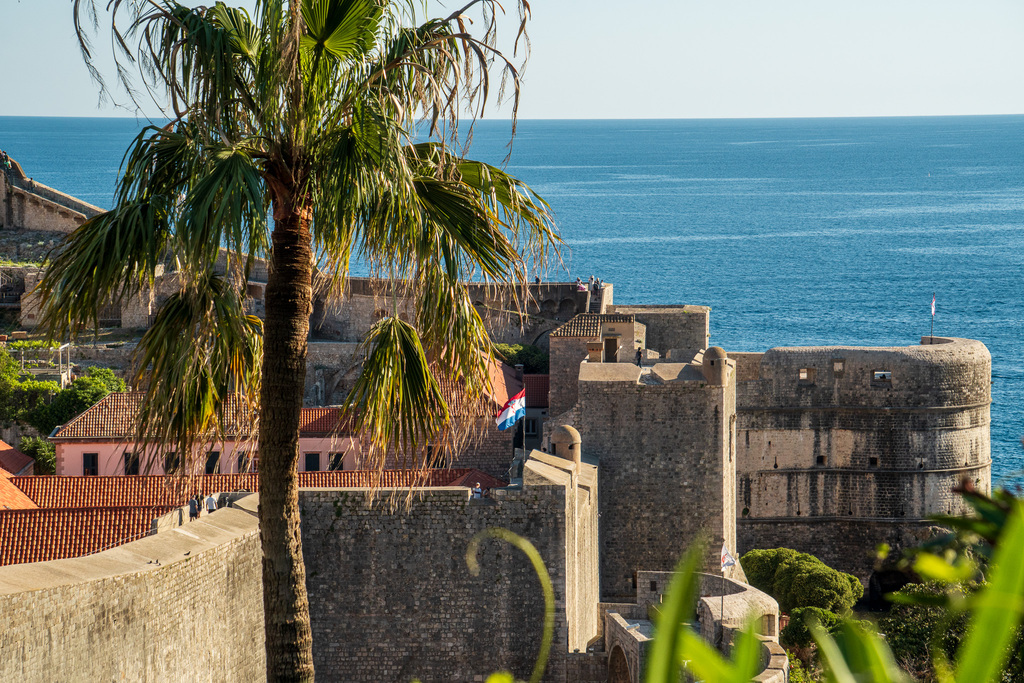
From Sarajevo, it is admittedly not super convenient to head to Dubrovnik. You will have to first take the bus back through Mostar, and then cross back into Dubrovnik. If you are short on time, you can bypass Bosnia and Herzegovina and simply head from Split to Dubrovnik.
Although that route is more popular and takes less time on a highway bus, there is something so magical about Bosnia and Herzegovina. It is a side of Europe that you must add to your Balkans travel itinerary.
How to Access
Most likely, you will not find a direct bus route that connects Sarajevo to Dubrovnik. You will first need to book a ticket to Mostar, which takes 2-3 hours. Then, you will book the bus from Mostar to Dubrovnik, which takes 3-4 hours. It could take longer if wait times at the border are longer.
Use the online bus service Omio to book your bus ticket. Make sure to print your ticket out beforehand. Also, have spare change with you. Typically, bags are not included in your ticket. To stow a bag under the bus, you will have to pay a few dollars per bag.
Where to Stay
Dubrovnik is one of the most popular cities to visit on this one-month Balkans travel itinerary. It is a stop on different cruise ships and attracts backpackers from across the world. That means there is no shortage of hostels near the city.
If you want an affordable accommodation located within the famous city walls of Dubrovnik, stay at City Walls Hostel. It has a cozy atmosphere, and its location is very convenient. Just be prepared to carry your bags up a few sets of stairs in the old town.
What to Do
The most popular thing to do in Dubrovnik is to walk the city walls. This UNESCO World Heritage Site is the defining feature of the city. The entire old town of the city is protected by grand walls, which you can explore and see impressive views over the whole town.
Visiting the city walls is expensive. I recommended buying the Dubrovnik Pass because it grants access to the city walls and various museums. You also get a 24-hour bus ticket. It costs 40 EUR for a day, which is the same cost for entry to the city walls. Not everything included on the Dubrovnik Pass requires a visit. However, Rector’s Palace, Friars Minor Franciscan Monastery Museum, and Lovrjenac Fortress are must-dos.
Although the city walls are exciting, they get crowded and busy. Escape the crowds and take a ferry to Lokrum Island. It only takes 15 minutes to reach the island from Dubrovnik’s old town. Here, you can explore botanical gardens, a monastery, lagoons, and an old fortress. You can easily spend a whole day exploring Lokrum. It costs around 30 EUR to enter the island and take the ferry. You can buy tickets at a stand near the ferry dock.
Day 19-21: Stop in Kotor
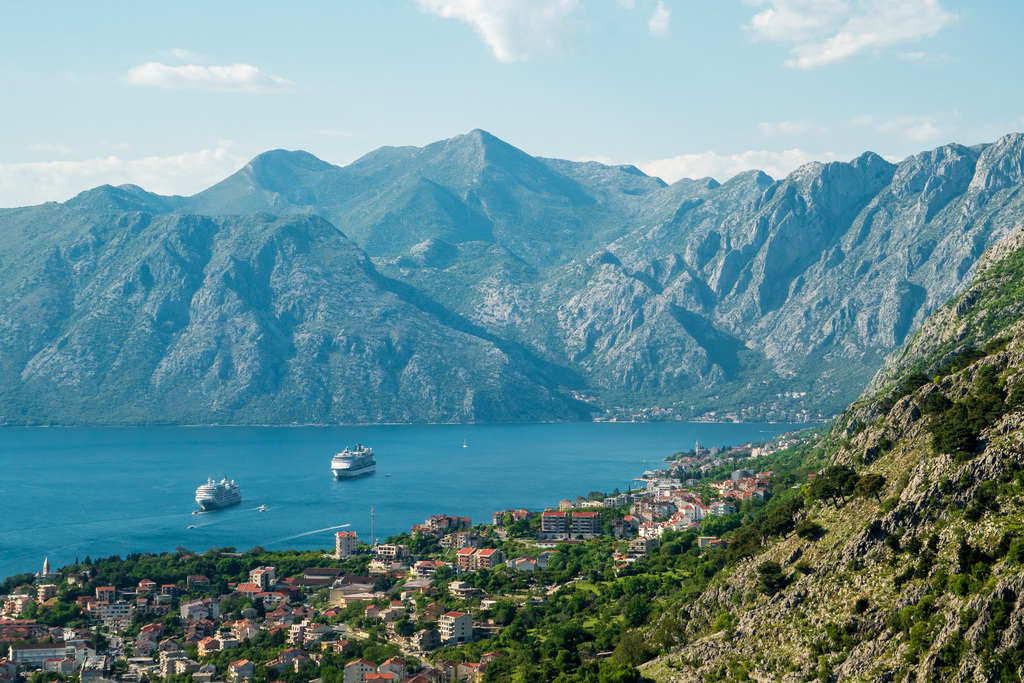
After spending 3 nights in Dubrovnik, it is time to leave Croatia and visit a new country, Montenegro. The most popular tourist spot in Montenegro is Kotor. Kotor is very similar to Dubrovnik, but a bit smaller. It has city walls you can explore as well (although not as well-preserved).
How to Access
Kotor is fairly close to Dubrovnik. Only 2-3 hours separate the cities by bus. However, bus times can be longer if the border is busy. At this point in your one-month Balkans travel itinerary, you will be familiar with the troublesome process of going through border control. The bright side is that you will get a new passport stamp for each country you visit!
Use the online bus service Omio to book your bus ticket. You will pay around 40 EUR, and you might have to pay extra to switch out your paper ticket for an actual ticket at the station. Unfortunately, every bus station has different rules and fees in the Balkans. Also, have spare change with you. Typically, bags are not included in your ticket. To stow a bag under the bus, you will have to pay a few dollars per bag.
Where to Stay
Pupa Hostel is located directly overlooking the bay and is conveniently close to Kotor’s Old Town. The staff here are friendly and knowledgeable. They try extra hard to create a welcoming atmosphere.
What to Do
The most popular activity to do in Kotor is to hike to the Fortress San Giovanni, admiring the grand views of Kotor Bay along the way. It costs 15 EUR to enter the city walls to trek up to the fortress. You can also hike from the Ladder of Kotor near the river (the trail starts here) and hike the many switchbacks up to see the same view for free.
In Kotor’s Old Town, make sure to visit Saint Tryphon’s Cathedral. This historic church costs 4 EUR to enter. Besides enjoying its beautiful interior, there is a balcony and a small museum. This landmark is an underrated gem in Kotor.
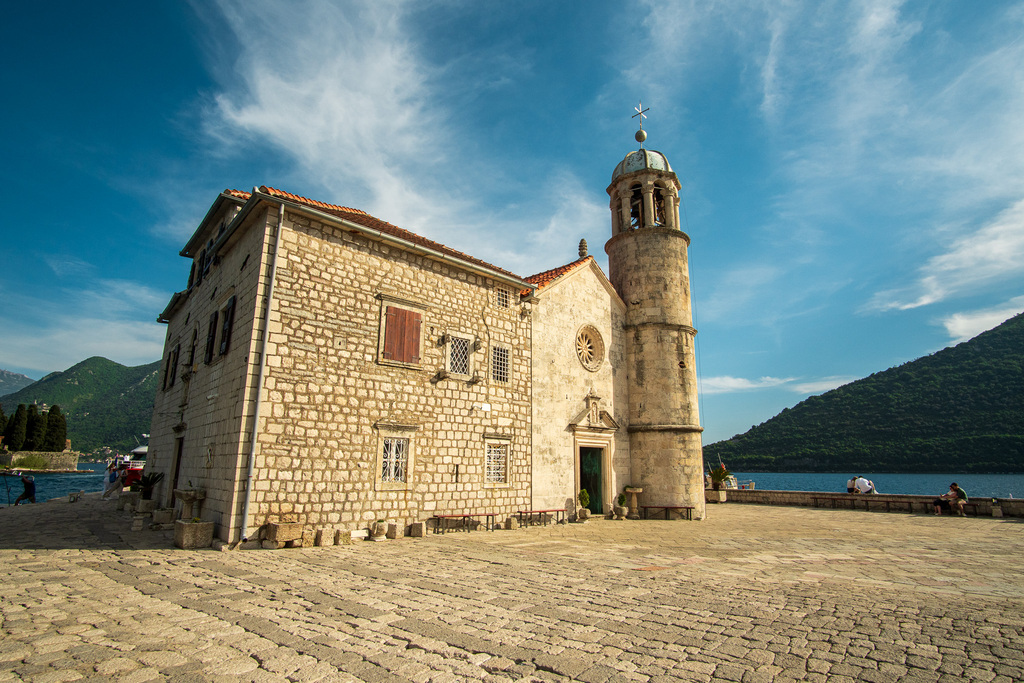
While staying in Kotor, make sure to take a day trip to Perast. The local blue line buses connect Kotor to Persat. From Persat, you can take a small boat to an island that is home to a church and a small museum. It costs 5 EUR to be transported to the island, and 5 EUR to enter the church.
Day 21-24: Trek to the Albanian Alps
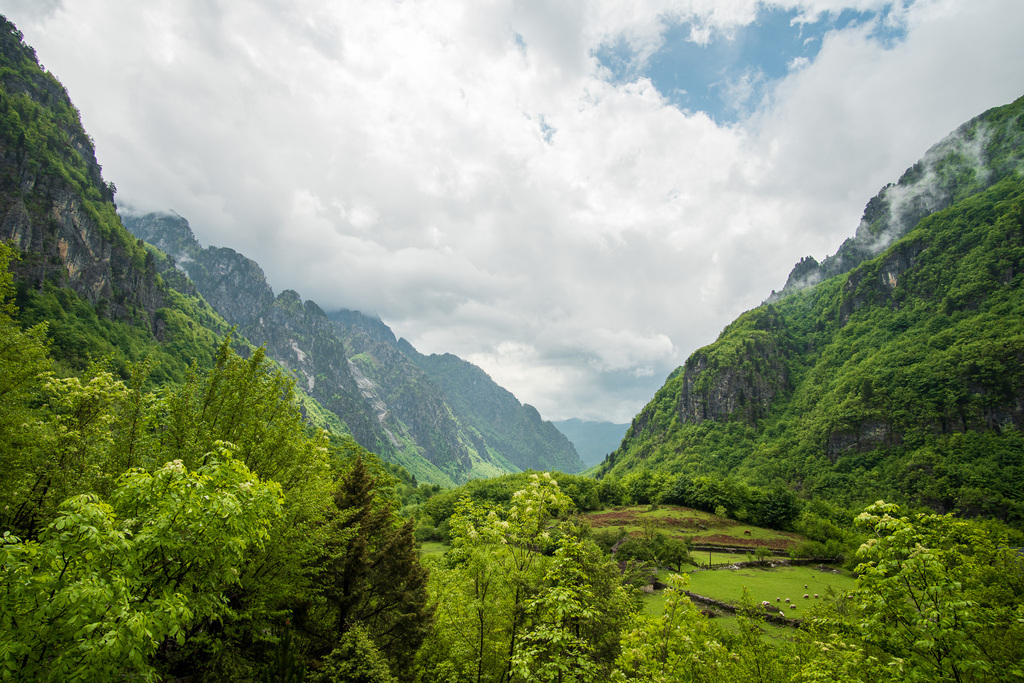
After a quick stop in Montenegro, I suggested crossing the border into Albania. Albania was once a closed-off country that experienced a harsh communist dictatorship that outlawed all religions.
Today, the country is still recovering from that period of isolation and economic despair. However, it is slowly emerging as a tourist destination. Although the travel industry is not as robust as in most European countries, it is also younger and more vibrant. The people here are eager to connect travelers with Albania’s rich culture and beauty.
A highlight of Northern Albania is their Alps. There is a backpacking route (the Valbona to Theth hike) that is blowing up on social media, and many young backpackers set out to conquer it. If you want to hike in the Albanian Alps, then start your journey in the city of Shkodër. It is considered the gateway to the Alps.
How to Access
To reach Kotor from Shkodër, take a highway bus. The trip is around 4 hours, and the cost is around 30 EUR. Use the online bus service Omio to book your bus ticket. Make sure to print your ticket out beforehand. Also, have spare change with you. Typically, bags are not included in your ticket. To stow a bag under the bus, you will have to pay a few dollars per bag.
Where to Stay
Although Shkodër is a cool city, the main reason I came here was to stay at the Wanderers Hostel. This hostel has extremely helpful staff who will help you plan your trip to the Albanian Alps. Stay a few nights here to find fellow backpackers who will join you on your hike from Valbona to Theth.
It is really difficult to plan a trip to the Alps without a car. Wanderers Hostel will book all the transportation and accommodations you will need for your hiking trip at a very affordable price. They will share recommended hiking routes based on the season and answer any questions you have. Expect to spend at least two nights in the Alps. I only stayed one night in Shkodër, but most people spend longer because this hostel is so friendly and social.
What to Do
The most popular hike in the Alps is the Valbona to Theth backpacking hike. The hike itself is 9 miles, but it is recommended to spend a night in Valbona and then a night in Theth afterwards. The Wanderers Hostel can sort out all the logistics for you.
If you have less time or do not want to backpack, you can do a day hike from Theth to the summit of the Theth to Valbona hike (Valbona Pass). I opted for this option since I was traveling alone and the weather was not ideal. Besides these challenging hikes, in Theth, you can hike to a waterfall or visit the famous Blue Eye.
If you are visiting off-season when you cannot hike in the Alps, you should still visit Shkodër. Watch the sunset at the Rozafa Castle, learn more about a prison used during the communist regime at the Site of Witness and Memory, and bike around Lake Shkodër.
Day 24-25: Bus to Tirana, Albania’s Capital
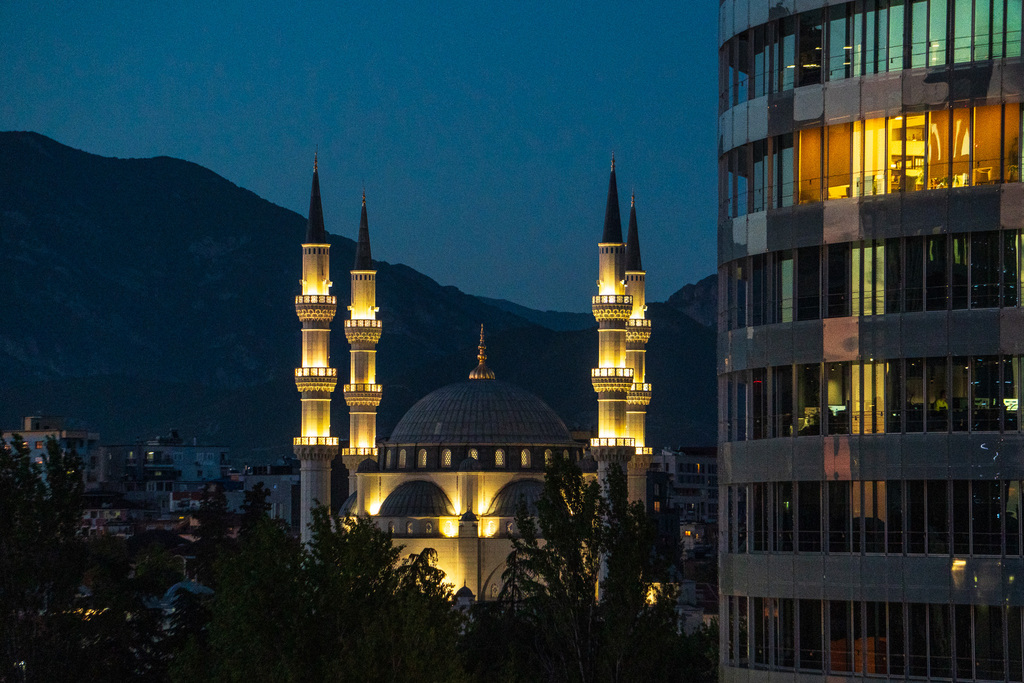
You can’t visit Albania without stopping at its capital. Tirana is a unique city with remnants of its communist past. It is not the most memorable city on this one-month Balkan travel itinerary, but it is worth spending a few days here.
How to Access
If you stay at Wanderers Hostel in Shkodër, they will arrange for a car transport to Tirana. Although the cities are only about 2 hours away from each other, traffic in Tirana can get bad. You will realize the rules of the road aren’t necessarily followed by drivers here.
Where to Stay
When in Tirana, stay at Trip’n’Hostel. This hostel has character and charm. It is an old Italian-style villa with two gardens. You will enjoy the hostel’s artistic vibe while eating their free breakfast each morning.
What to Do
Browse Skanderbeg Square, admiring the modernistic and brutalist architecture. Learn more about the secret police force used during the dictatorship at Bunk’Art 2. Take a walk in Tirana Park and around Biloku, an upscale neighborhood with nightlife.
Day 25-26: Visit The Beach Town Of Saranda
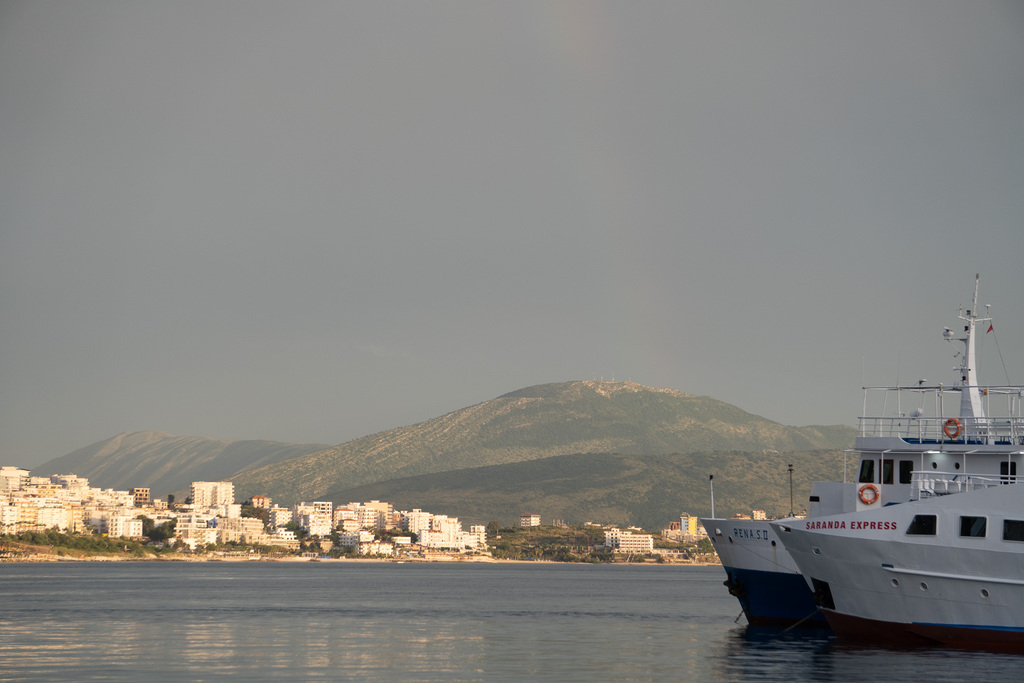
Continue south across Albania to Saranda. This small beach town is slowly becoming a popular summer spot. It has nice beaches, but the main reason to visit Saranda is because of its connection to Greece.
You can take a short ferry from Saranda that takes you to the Greek Island of Corfu. After taking many highway buses, I was excited to change it up and take a ferry to reach the last country on this one-month Balkans travel itinerary.
How to Access
To reach Saranda from Tirana, you first need to take a city bus (13B) to the Regional Bus Terminal North and South Albania, which is 20 minutes from the city center. However, this is not a typical European bus station. It is essentially a parking lot for vans heading to different cities in Albania.
Look for a bus with a sign on the driver’s windshield for “Saranda.” Near this bus should be a small white stand that sells tickets for this minibus. Tickets cost around 15 EUR, and the trip takes around 4 hours. Try to use the bathroom before getting on board because the bus does not necessarily stop.
Where to Stay
Stay a night at Central Boutique Hostel. It offers free breakfast, and it is close to the beach. It is a charming property that receives high reviews and offers more privacy than a typical hostel.
What to Do
Trek up to the Kalaja e Lëkurësit for sunset. This hilltop castle is the most popular overlook in Saranda. Also, spend time relaxing on Saranda Beach and walking the promenade.
Day 26-27: Corfu
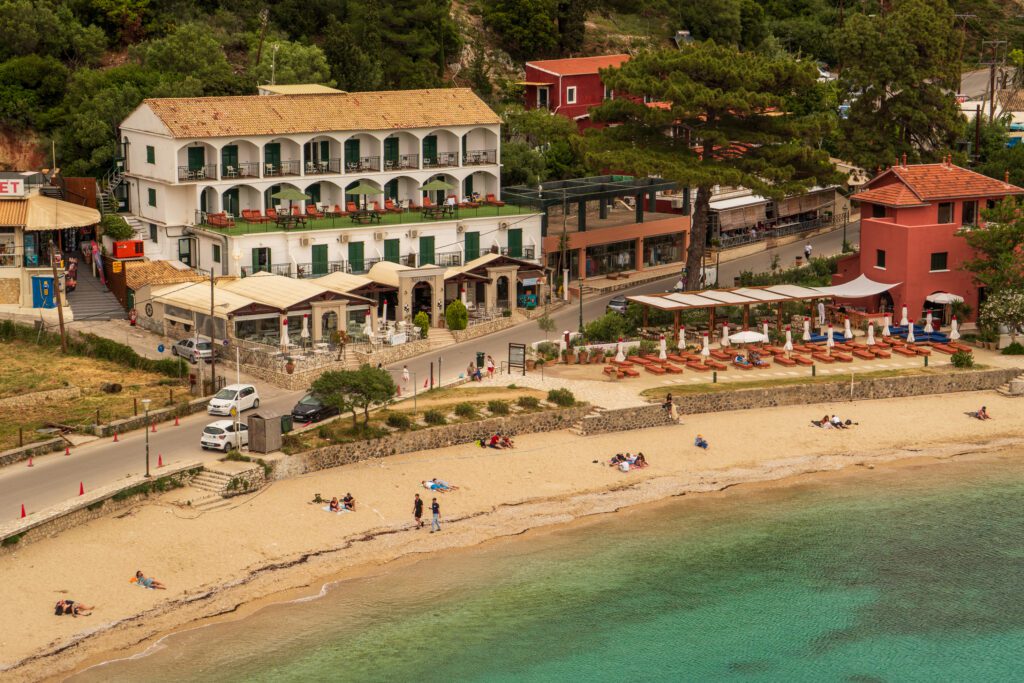
It is easy and quick to get from Saranda to Corfu (Greece). It is one of the most convenient ways to enter Greece from Albania. I only spent a day in Corfu because I had limited time on this one-month Balkans travel itinerary.
I recommend spending longer than a day in Corfu, but it is still possible to only do a day trip in Corfu. You can skip Slovenia or Bosnia and Herzegovina on this Balkans travel itinerary, so you can have more time in Corfu.
How to Access
You can buy your ferry tickets on Omio for 20-30 EUR. The ride from Saranda to Corfu is only 30 minutes, but Greece is an hour ahead of Albania. You will have to go through border control in Corfu, so try to get off the boat quickly. However, I found the border checkpoint quick and efficient.
After you spend a day or more in Corfu, take the ferry from Corfu to Igoumenitsa, so you can reach the mainland of Greece. You can buy your ferry tickets on Omio for 10-20 EUR. This ride takes 1-2 hours.
Where to Stay
Since I only took a day trip to Corfu, I did not stay in Corfu overnight. Rather, I spent the night in Igoumenitsa. I stayed here because buses depart from here to my next destination, Kalabaka. I stayed at Stavrodromi Hotel in Igoumenitsa because it was the best budget option near the bus station.
What to Do
In Corfu’s Old Town, take in views at the Old Fortress, which is free for individuals under 25. Visit the ornate Church of Saint Spyridon and stroll around Spianada Park. If you have more time, take the Green KTEL bus to the village of Palaiokastrista. Here, you can explore the Monastery of Paleokastritsa and relax at the Agios Spiridon Beach. Corfu is a bit difficult to explore with public transport and requires careful planning. Here is a link to the bus timetable.
Day 27-29: Hike Meteora’s Rocks
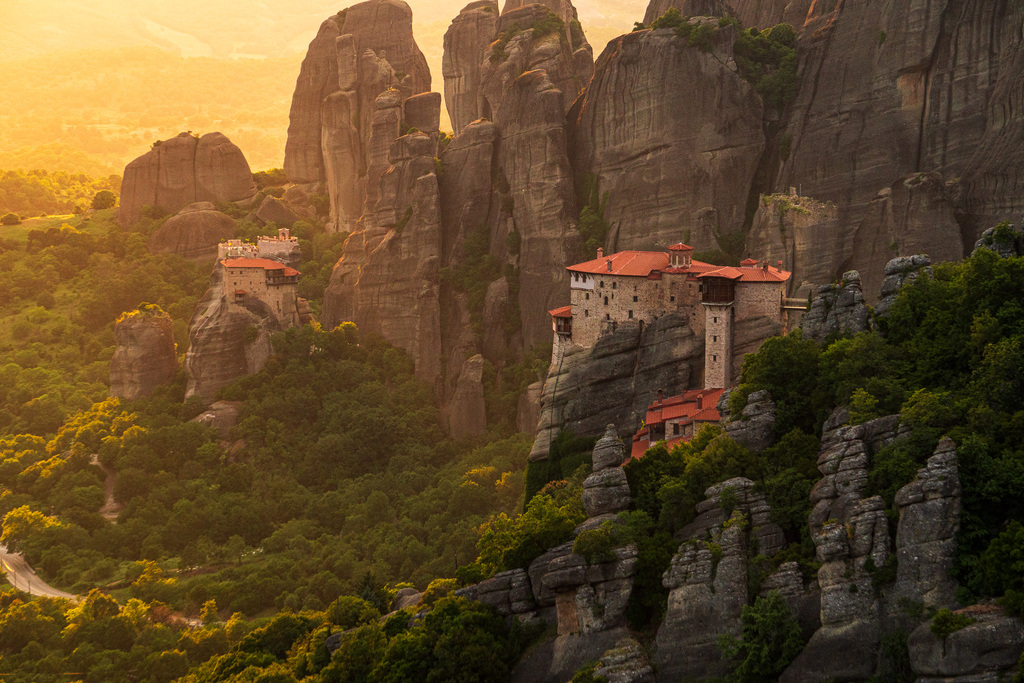
Besides the ancient ruins in Athens, Meteora is possibly the next most famous tourist destination. Meteora is a group of monasteries found in the central mainland of Greece. However, this is not your typical monastery. These religious enclaves were built on top of sandstone cliffs, so the Ottomans could not reach them during their attacks.
Meteora, located near the city of Kalabaka, is the perfect stop for a history fan who loves hiking. Some local buses take visitors to the remote monasteries. However, hiking to them from Kalabaka is more exciting and immersive.
How to Access
From Igoumenitsa, take a 2-hour KTEL bus to Ioannina. Then, transfer to a KTEL bus headed for Trikala (get off in Kalabaka). The entire journey costs around 25 EUR and takes about 4 hours. You can buy your ticket at the KTEL bus station in Igoumenitsa. Here is the link to the bus timetable. However, you might have to have a layover in Ioannina because the bus times do not always overlap. If so, explore the city’s castle and lake.
Where to Stay
Although Kalabaka is a small city, there is a budget hostel option. Stay at Meteora Central Hostel if you want to save money on accommodation in this popular tourist destination. The hostel is in the heart of Kalabaka and close to the hiking trails to Meteora’s monasteries.
What to Do
6 monasteries make up the Meteora complex. You do not necessarily need to go inside each of them, but it is fun to see the outside of each monastery. You will have to pay around 5 EUR to enter each monastery, and you need to be dressed modestly.
Most tourists come by tour bus to the monasteries, so if you want to escape the crowds, you should hike to the monasteries from Kalabaka. There are different hiking routes, but the Eastern Monk Trail is the easiest. It won’t take you to every monastery, though. During the hike, I enjoyed photographing the various viewpoints of the monasteries you found along the trail.
Day 29-31: End Your Trip In Athens
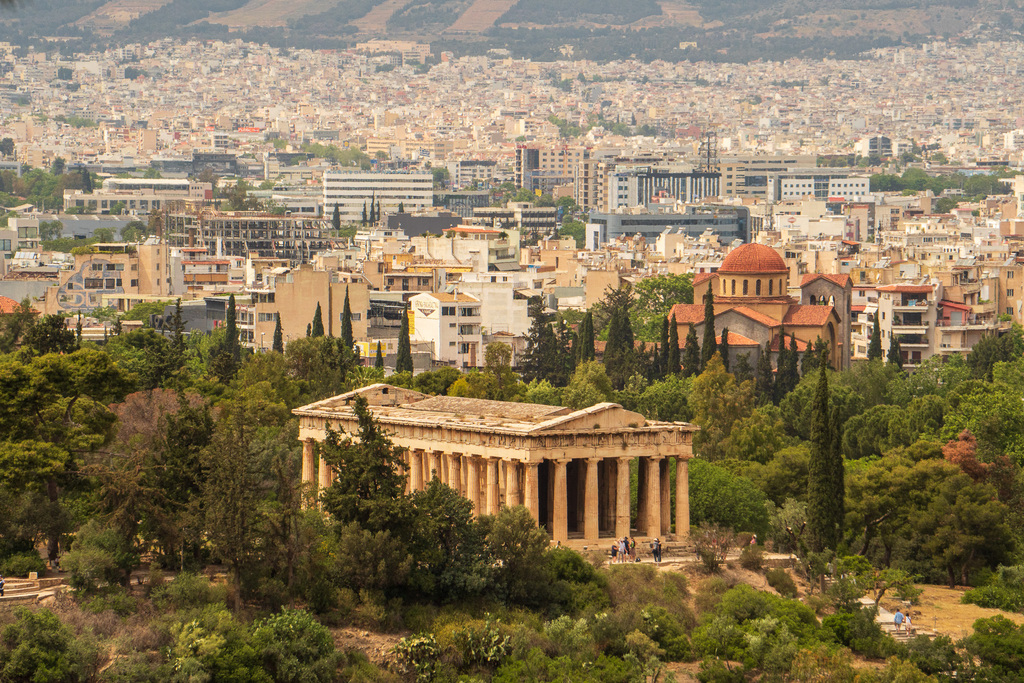
After hiking around UNESCO World Heritage sites in Kalabaka, it is time to finish your trip in a city home to some of the most infamous heritage sites in the world. Athens is known for its Greek and Roman ruins, but it also has a growing food scene and bustling city atmosphere.
I strategically ended my one-month Balkans travel itinerary here because it is economical to fly out of Athens to the U.S. Fly a budget airline like Norse Atlantic Airways if you want to score savings on your flight home. Of course, budget airlines are not necessarily ideal, but they are perfect for a backpacker trying to maximize savings.
How to Access
From Kalabaka, you can take a train to Athens. This train ride takes around 5 hours, and you can book your ticket online on the Hellenic Train Website for around 30 EUR.
Where to Stay
Book Athens Hub Hostel for an ideal hostel experience. This award-winning hostel is attached to a large communal cafe, and the facilities are very modern. The location is near the main attractions in Athens. This hostel also organizes different events, like a cooking class you can take.
What to Do
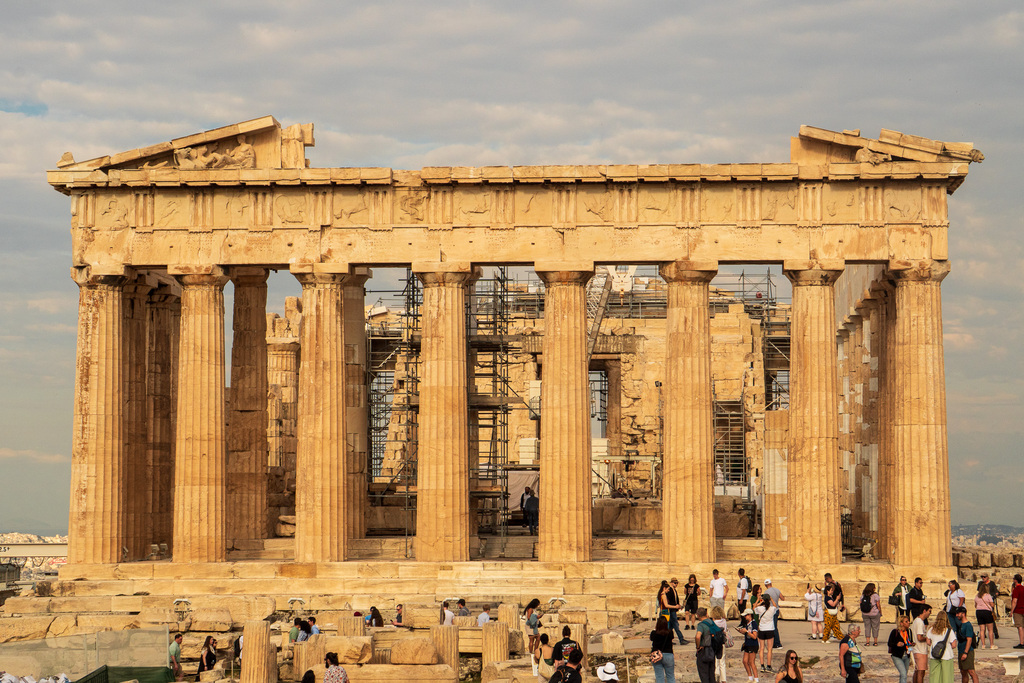
You can’t visit Athens without touring the Acropolis. To get the cheapest tickets to the iconic attraction, buy your tickets on the Hellenic Heritage Website. Tickets are released 30 days before. If you fail to secure tickets, you can always purchase tickets from a third-party vendor, like Get Your Guide.
Also, make sure to visit the Panathenaic Stadium, where the first modern Olympic Games took place. Stroll around Plaka, seeing the historic sites, and get lost, wondering about the National Archaeological Museum. Watch the sunset at Areopagus Hill. It is a much less crowded alternative to watching the sunset on Mount Lycabettus.
The Perfect One-Month Balkans Trip Itinerary
There is no perfect itinerary for backpacking the Balkans in one month. It is difficult trying to balance not rushing and maximizing your time. Plus, due to the region’s infrastructure, it is more difficult to country-hop like you can in Western Europe.
You can completely follow my itinerary from start to finish, but I suggest making some changes based on your preferences. For example, skip Slovenia if you want more time to hit the beaches in Greece. However, follow my advice on where to stay and what to do in each location to make planning your trip easier.
Visiting Western Europe? Read My Europe Backpacking Itinerary: Visit 10+ Countries in 30 Days